
Member Spotlight on Bruce DeMent of Kastalon, Inc.

Chicago Family Business Council: Congratulations on celebrating your company’s 50th anniversary! Can you tell us a little history on Kastalon, Inc.?

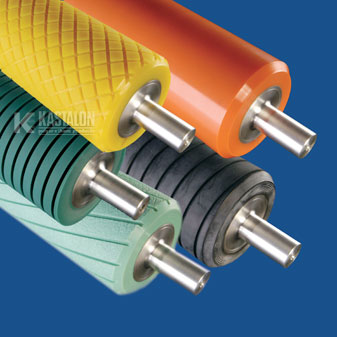
Bruce DeMent: Kastalon, Inc. is in the business of designing, engineering and manufacturing polyurethane rubber OE and MRO components for a wide variety of applications and industries. Some of our primary industries are: steel and metals manufacturing, heavy equipment, military, aerospace, materials handling, industrial machinery, food, mining, appliances, building materials and any opportunity requiring high quality polyurethane parts.

The company was founded in 1963 by my father Robert DeMent and 2 of his friends. This was one year after John Glenn orbited the earth and the term “space-age” material was first coined. Like most entrepreneurial starts, my father was a partner in a very small company and was looking for a new opportunity. He “put the word out” that he was looking for something to do and was approached by two friends who were looking for a partner to help them launch a new business. They had heard about a new material called polyurethane that was the next best thing since sliced bread. They were unsure what the material would do, but it was great! Outside of not being able to pronounce the name of the material, and knowing it was “space age material” my dad and his friends began the partnership. My dad would work, they would invest.

During the first year, the business was housed in a space equivalent to a one car garage which was borrowed from one of the partner’s fathers. My dad worked long hours and would bring home parts he made during the day for my brother and I to trim, clean and get ready for shipment in the morning.

After the first year, the business was in the red and the partners had enough. They expected to make at least double their money during this time. My dad knew the company was about to make a profit, but they had enough. In an act of bravado, my dad offered to buy them out for the return they wanted. He thought they would see his confidence and stay in the business. Instead, they accepted his offer, and for the second time in a little over a year my dad had to beg and borrow from the family and anywhere he could to obtain the money. No bank would touch the loan. He was “all in”, on his own and had to vacate the borrowed location. These were very tough times.

Subsequently, we moved, expanded, and moved again to our current 50,000 ft. facility. We grew from a one man shop mixing chemicals in soup and coffee cans that my brother and I collected and washed, to a 75 person state-of-the-art manufacturing facility supplying industries from deep sea to deep space with highly engineered polyurethane elastomeric components.

CFBC: What family members work with you in the business?

BD: At this time we have 4 family members in the business, myself, brother, a cousin and my son Bob who is a member of Aperion forum.

CFBC: How did you hear about the CFBC and what motivated you to join?

BD: I am a charter member of the CFBC. I was contacted in a phone call by Dennis DuBois asking if I would be interested in joining an exclusive organization of family businesses that was being formed and affiliated with UIC. I hesitated and he said there was a kick off dinner at a penthouse atop the 4 Seasons Hotel. He had me then!

The dinner got me started, I heard the spiel about meeting with other family business CEO’s and the very interesting concept of forum. I joined, figuring if this was bogus I would be quickly gone. After the first forum meeting of the Alpha forum I was sold. The people, experiences and opportunity to learn in a way that was not available anywhere else. I have been involved as much as possible ever since.

CFBC: How has the CFBC helped your company succeed?

BD: There isn’t enough room to tell how the CFBC has helped my company succeed! Briefly, the CFBC has provided me with access to resources, both with our strategic partners and membership I would not have otherwise had. The education I have gained from the many excellent speakers, seminars, discussions and interaction with other CEO’s has given me great insight in guiding my company over these many years. This insight has helped me to avoid many pitfalls and appreciate many opportunities that I would have missed without my CFBC experience and support.

CFBC: What has been the most rewarding aspect of your experience with your forum
and the CFBC?

BD: By far the most rewarding experience of the CFBC is the friendship and support of the wonderful like-minded people I have met, many of whom have become close friends. Without the CFBC I would never have been able to meet these people or know them on such a close personal level.

CFBC: Is there one thing you have learned from being a member of CFBC that has impacted your business or your life the most?

BD: There are so many things I have learned that have had great positive impact on me, boiling down the experience to one thing does not do the organization justice. But to answer your question, the one thing that has had the greatest impact is the application of forum protocol and its application of Emotional Intelligence in both my business and personal lives. This has literally been life changing for me. Without the CFBC, I would never have learned of or understood this powerful way of thinking, living.

CFBC: What do you enjoy doing in your free time?

BD: One thing I greatly enjoy in my free time is riding one of my motorcycles. I have a 1996 Road King that I just had completely reworked. I love that bike, I am a bit vertically challenged, but now that it has been lowered, it is really sweet. I also have a 2012, Soft Tail Convertible Screaming Eagle. I took that for a break in ride last May to the Smoky Mountains with my forum bother Tony Gfesser. I have made many rides with others from the CFBC and am going to Sturgis this summer.

CFBC: What one book would you recommend to your fellow CFBC members?

BD: I have a whole bibliography of business related books that have greatly benefitted me and my business, but if I had to narrow it down to only one, without a question it would be Emotional Intelligence: Why It Can Matter More Than IQ by Daniel Goleman.

CFBC: What are your plans for the future?

BD: My plans for the future were in a bit of a state of flux. My brother, and equal partner, is retiring late next year. We have been considering our options regarding succession. For a time we were strongly considering selling and retirement. I was ambivalent about retiring and since then we have reached agreement where I will purchase my brother’s interest. I will continue to work at what I love to do for some years to come. (I will hire people for the other parts!)

CFBC: What was your first job?

BD: My first job was at the age of 11, my brother and I cut grass for some neighbors and friends of our family. The most memorable and worst was the lawn of a home with 3 large dogs. Hot August days weren’t pretty! We had these lawns because other kids wouldn’t cut them. The lesson of doing a little more difficult things, and the little greater reward associated with them has carried over into my business life. We still produce many things our competitors cannot or will not manufacture.

CFBC: Can you describe your ideal customer?

BD: Our ideal customer is one who appreciates our customer intimate approach and allows us to use our skill and expertise to solve their problems. We are expert in our field and when we have a customer who allows us to utilize our abilities we can provide our customer with the greatest value. Not only does this provide the greatest benefit to our customer and ourselves, we have more fun!


This entry was posted in Blog, Spotlight and tagged 50th Anniversary, Bruce DeMent, CFBC, Chicago Family Business Council, Entrepreneurs, family business, Kastalon Inc. Posted on February 8th, 2013 by Judy Hogel
Follow the Money – A Mandrel Sleeve’s Truth

When my children and I are talking about various social, political or other issues, I often find myself using the phrase “FOLLOW THE MONEY”.  It’s funny how often this simple phrase holds true. Many answers to some of life’s question can be answered by this phrase.

Why should mandrel sleeve’s be any different? An example of this hit me in the head when I was talking with a steel producer in New Carlisle, IN. They didn’t think that they had any issues with the life of their mandrel sleeves. They shared with me that they consistently got about 8 months to a year of life on their sleeves and then the sleeve needed to be replaced due what they called “sagging, like it had no rebound or memory”. The plant manager said “It’s been that way as long as I have been here, I don’t feel we currently have any issue’s with the life of our Mandrel Sleeves”. So I asked can we “Follow the Money”?

Because they kept such detailed records on the longevity of their sleeves, it would be that kind of record keeping that would allow us to “Follow the Money” and prove to them that they should and could get a longer life span and more efficiency out of these sleeves.

So we offered the “Kastalon Challenge” – Provide us with all of the specifications, including the application and environment the mandrel sleeve will be operating in. Purchase and run the engineered Kastalon Mandrel Sleeve and if it does not last longer than your current supplier’s Mandrel Sleeve, we will supply them with another mandrel sleeve for no additional cost.

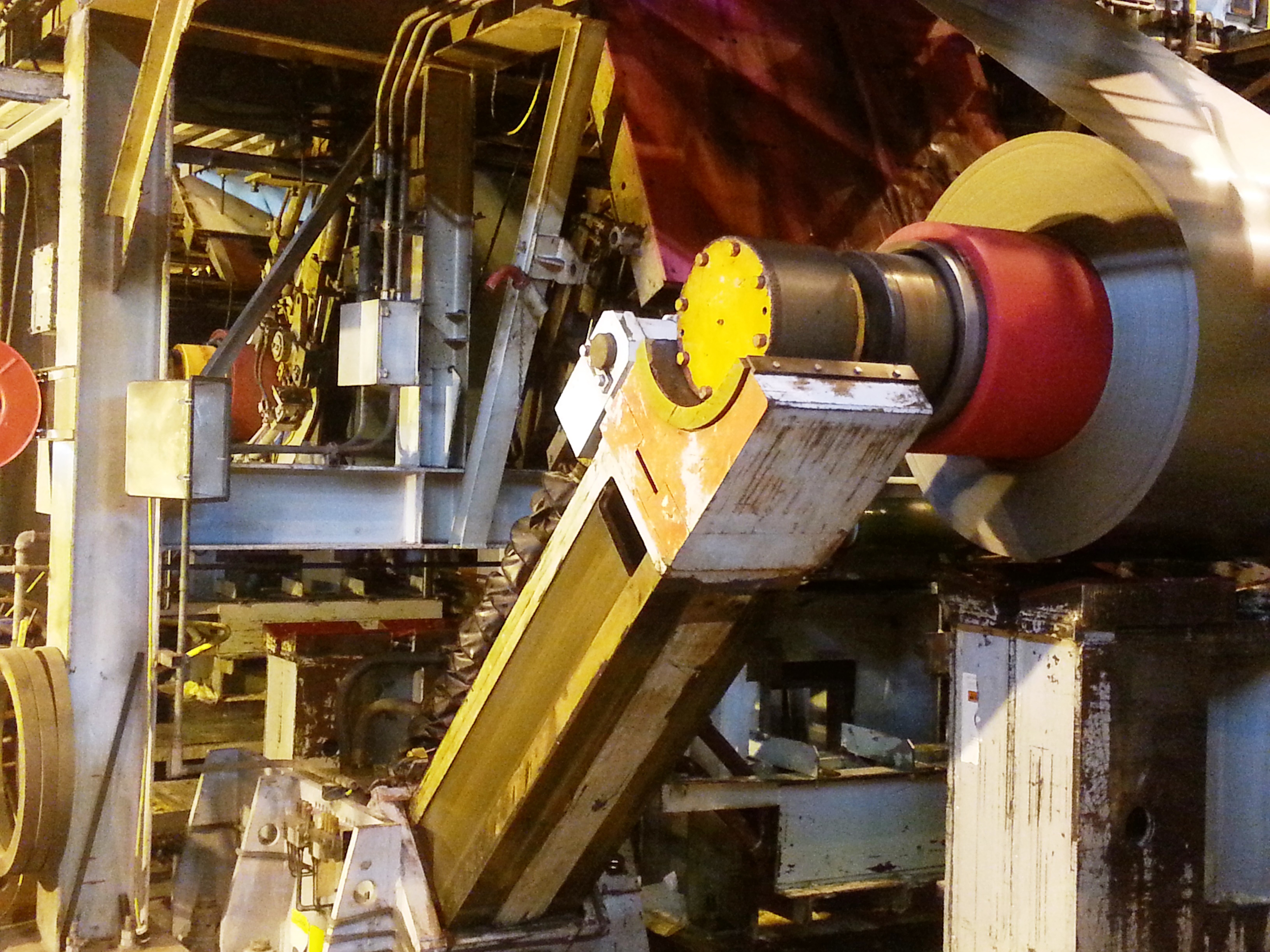
Kastalon manufactured a mandrel sleeve for their high speed steel processing line. At the rewind end of their line they have two rewind mandrels that work in tandem with each other. This would make for a great test. They installed the Kastalon sleeve and their current supplier’s sleeve as well at the same time. After the sleeves were tested for only four months it was clear on inspection some “sagging” was already showing on the current supplier’s sleeve, however, the Kastalon sleeves showed no wear or sagging whatsoever. So “ Follow the Money”. It was clear that Kastalon sleeves did in fact last longer and their assumption that they had no issue with their current supplier sleeves was not adding any profits (MONEY) to the bottom line.

They placed an order for two more Kastalon sleeves giving them a total of three. A year later they ordered one more from Kastalon. This gave them two in use and two spares that they would rotate in and out of production every six months for inspection.

A year later they placed an order for two more sleeves just as a precaution because they have never experienced mandrel sleeves that would last that long. As of today, all four of the original sleeves are still in rotation and the two ordered a year later are still in the storage warehouse yet to be used.

This is a high speed line that usually runs around 2,800 feet per minute. This customer has averaged running at around 78 percent of capacity. You can imagine the amount of times our four sleeves have expanded and collapsed in the past 5 years.  And to think they thought they did not have any issues with their mandrel longevity. I am so glad that we “FOLLOWED THE MONEY”

Mining uncovers polyurethane advantages

One of the by-products of mining involves displacing huge amounts of dirt so it only seems natural that the type of equipment that is used is coined “earth movers”. Equally as logical is the fact that the OEM’s for these types of equipment must consider certain protection from the abrasive nature of dirt and vibration. For many years, Kastalon has engineered a proprietary polyurethane formula specifically for these types of applications.

Recently, a new mining challenge was given to the Kastalon designers for their problem solving. When reeling in a 4″ diameter steel cable, protection was needed to prevent the cable from banging into the steel structure of the equipment. Historically, wood blocks had been used to shield the cable from damage. The downside was that the wood splintered and broke easily. This created a housekeeping mess which required additional labor to clean-up and replace the blocks. If the operators did not take the time for the necessary maintenance, the steel cable would get damaged from banging into the steel structure which shortened the life of the cable.

Using the same proprietary Kastalon Polyurethane® formula used for other mining applications, the designers presented an engineered polyurethane pad that had a much longer life than the wood blocks it was replacing. In fact, the first set lasted over two years, which was unprecedented. The other advantage was that when the pads did need to be replaced, they were easily replaceable.

To learn more about Kastalon mining solutions or to contact a designer for a project that needs improvement, contact Lyn at sales@kastalon.com.

Polyurethane improves safety in mills

In a steel or aluminum mills, safety is always a major concern. With many employees staying in the workforce longer, there is a growing concern for reducing injuries that result from heavy lifting.

Recently, an aluminum mill established a goal to limit the maximum weight lifted manually at 50 pounds. In the roll shop this was a major concern because the bearings are held in place by a large steel split ring, known as a thrust collar that is locked into place. The maintenance process of changing out the bearing requires the worker to break the ring free and remove it. These rings can typically weigh more than 60 pounds each.

Interestingly, Kastalon was able to design a custom engineered polyurethane alternative that had all of the same strength and wear characteristics of the steel ring, but only weighed 12 pounds.

The first 4 rings well exceeded the life expectancy by lasting more than a year in continuous service and proved to reduced lost time due to back injuries in that area.

Not only did the mill find a method that would protect their workforce from unsafe practices but also found a way to achieve greater efficiency.

If you would like to learn more about our metal processing solutions, contact Lyn Thorne at lyn@kastalon.com.

Designing Rollers – Kastalon helps companies save by joining their design team!

When designing a roller assembly it is critical to take into consideration the actual application and environment that rollers will be operating in. Although the drawing might be accurate, it is essential to involve your roller manufacturer in the design phase to assist in choosing the right polyurethane compound that the roller will be covered with. Not all polyurethanes are the same, but understanding how the roller is going to be used and where the roller will be located, is essential in choosing the right material that will result in the best performance.

To avoid over engineering a roller assembly, which can affect the cost and lead time, the roller manufacturer can help choose the proper material with adequate tolerances for the specific application being planned. For example, calling out a very tight tolerance can drive up the cost of the roller unnecessarily.

This is where Kastalon can help.

Recently, a customer gave us a drawing for a new roller assembly for a new process. The engineers called out a TIR of .005. After several months of receiving the rollers as requested, they sat down with us and shared their concern that the cost of the rollers was negatively impacting their ability to sell their new system. Once they shared the actual application and environment with our design engineers it was determined by opening up the tolerance to .015, the cost could be reduced by more 20% with no effect on quality, life expectancy or system efficiency. The lead time was also significantly reduced and the outcome was the customer’s ability to deliver their new system at a lower cost and a reduced lead time.

We like to think that having us on your design team is a win, win proposition!

Steel producer in New Carlisle, Indiana. Mandrel Sleeve made by Kastalon Polyurethane

In May of 2007 we manufactured a mandrel sleeve for their high speed steel processing line. At the rewind end of their line they have two rewind mandrels that work in tandem with each other. Once our sleeve was tested for four months, they placed an order for two more sleeves. One to install on the other mandrel where our test sleeve was not on, and one for a spare. I then also recommended purchasing one more sleeve to make their inventory of mandrel sleeves in house to four. We recommended that because if they would change out the sleeves every six months and allow the sleeves that were just in use, to rest on the floor, that would also increase the longevity of the sleeves. Since May of 2007, they have purchased a total of seven sleeves. The original four were ordered IN 2007, and then one was ordered IN 2008 due to an operator error that tore one of the sleeves off their steel mandrel. And then in November of 2010 two sleeves were order for precaution because they have never experienced mandrel sleeves lasting this long. Three of the original four sleeves are still in service with the two that were ordered in 2010 sitting in their warehouse.

Two competitor’s sleeves of ours were used prior to 2007. Our customer explained to us that they had constant issues with the sleeve not performing correctly. Sizing issues from one sleeve to the next. Constant tension issues from the sleeves slipping (again sizing issues). And short memory life or sagging of the sleeves when the steel mandrel was collapsed for unloading of the coils.

This is a high speed line that usually runs around 2800 feet per minute. This customer has averaged running at around 78 percent of capacity since 2007. You can imagine the amount of times our four sleeves have expanded and collapsed in the past 5 years.

Originally reported in May, 2007