Fork-Kushions® – Siding Manufacturer

Challenge/Problem/Issue
A quality control supervisor of a globally recognized manufacturer of engineered wood siding was continually experiencing significant damage caused by their forklifts picking up bundles of siding. Unique to the industry, their siding boards are denser and more rigid than traditional strand board siding, however, this rigidness also makes the sharp edge more susceptible to damage when coming in contact with the back of a lift truck. As a result, the supervisor searched for possible solutions.

Solution
Upon investigation, the supervisor learned of a revolutionary forklift bumper system called Fork-Kushions® that had proven to provide impressive damage control. Due to the sharp edge of the siding, it was determined that the “cut-resistant” style with its durable outer surface and it’s shock absorbent center would be the best fit to test against their application.

Customer Value
After 2 weeks of putting the Bumper into service they saw a 30% reduction in Broken Board. There was also a reduction in Siding interlocking with itself when the forklift picked up the tiers of newly milled siding. Although this was not a defect, it did cause safety and ergonomic issues and was greatly reduced by using the bumpers. The only concern they had was that they were going to have to purchase a longer fork for the forklifts to make up for the 1-1/2″ they lost for the bumper and it’s bracket.

After a full 3 months in service, the Fork-Kushions combined with the hydraulic carriage dampers for the fork lifts resulted in about an impressive 60% reduction of in process damaged board.

Fork-Kushions® – Masonite

Challenge/Problem/Issue
Exemplifying manufacturing excellence, one of the a world’s leading manufacturer of interior doors, entry doors, french doors and glass doors felt it important to address the scratches and dents being caused by the forklifts transporting their product throughout the production facility and shipping area. The challenge was to find a process improvement that could realistically and economically prove effective, and increase the volume of quality going out the door.

Solution
Having heard of the new innovative bumper system developed by Kastalon , the plant management enlisted our assistance in matching the right bumper for the application. Kastalon recommended a soft grade Fork-Kushion® to absorb the doors impact while providing a non-scratching, non-marring surface for the doors to rest as the load is shifted back on the forks.

Customer Value

Customer immediately saw a reduction in their damage. The improvement not only saved significant dollars in the time and material used to touch-up and repair the damage, but it also improved the shipment times. Within 30 days, the reduction in damage was so significant that management issued a mandate that all forklift trucks be outfitted with a set of Fork-Kushions.

Expanding Mandrel Sleeves – Titan Steel

Challenge/Problem/Issue –
Titan Steel was not satisfied with the scrap rate they were experiencing on the coil processing lines and wanted to find a way to maximize their output.

As one of the worlds largest distributors of tinmill and an important distributor of steel plate including pressure vessel plate, hot and cold rolled steel, coated steel products including galvanized steel and prepainted steel, efficiency are extremely important.

Solution
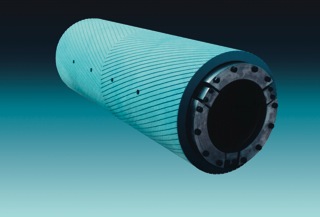
Kastalon engineered expanding mandrel sleeves made from specifically formulated Kastalon Polyurethane® with exceptional wear properties and expansion capabilities. The mandrel sleeve not only increased the diameter of the mandrel but significantly reduced the damage and reduced the manpower required for change-outs.

Customer Value
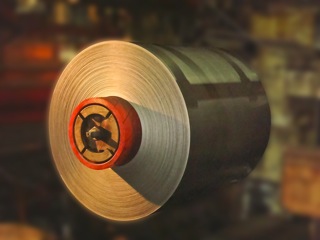
According to the Plant Manager, “Kastalon’s Expanding Mandrel Sleeves virtually paid for themselves the moment we unwound our first coil. With coil prices at a premium, every effort to maximize our output must be made and we look to Kastalon to help design products such as Mandrel Sleeves. An initial investment on our part has optimized our production, giving our customers an excellent finished product while maximizing our operating profits.”

Running 180,000lbs per day, Titan Steel calculated a yield of 50-75 more sheet-per-coil on their blanking line using Kastalon’s Expanded Mandrel Sleeves. At a estimated cost of $2.00 per sheet, that represents a savings of $800-1000 per day, which does not include the huge cost savings in the manpower required to scrap the previously damaged sheets.

Fork-Kushions® – New muscle takes the Floor

New patent pending Coil Saddle takes safety and stability to a whole new level.

Alsip, IL – Kastalon, Inc. has blended portability and stability to create the Coil Saddle , a revolutionary coil storage device for any application. The deep cradle fits virtually any size coil and takes up minimal floor space. The unique design offers the versatility of using it as a moveable fixture in staging areas or affixed permanently to the storage area floor.

Made of bright safety yellow polyurethane and reinforced steel frames the Coil Saddle surprisingly only weighs 45# and can be easily moved out of the way when not in use, thus avoiding tripping hazards.

With the cost of metal continually increasing, the cost of scrap becomes a greater factor to your profitability. Coil Saddles is your front line weapon in scrap management by protecting surface sensitive metals from floor irregularities and contamination.

Kastalon has been a leader in the design, engineering and manufacturing of high quality, innovative polyurethane parts and products to protect metals. From the time metal is rolled, coated or processed Kastalon roller coverings, mandrel sleeves, filler plates, coil handling pads, fork truck bumpers and coil storage products are in service providing outstanding protection and increasing yields.

Kastalon Crane Bumpers – Simple and High Performance Can Be One and the Same

For more than 40 years, Kastalon supplies crane bumpers into every imaginable environment around the world.

From ports and shipyards to steel mills and industrial facilities, Kastalon bumpers are unaffected by extreme environmental conditions, and are highly effective in temperature extremes from less than -51°C (-60°F) to 107°C (225°F).

Approved for use on nuclear fueling cranes by the U.S. Navy and for nuclear power house cranes, Kastalon crane bumpers are virtually unaffected by gamma ray exposures in excess of 1×10⁹ Roentgens.

Whether you are purchasing new equipment or are replacing existing bumpers, specify Kastalon Crane Bumpers.

To assist you in sizing or customizing bumpers, Kastalon offers an interactive web site for calculating the exact bumpers to meet any requirements.

Access the Kastalon Crane Bumper Calculator by visiting www.kastalon.com or contact us directly and an applications engineer will help select your optimum bumper.

Sound Value Being Added to the Workplace

In 1987 society was introduced to a relatively new term called Ergonomics. By definition, the new buzz word means “The study of workplace equipment design or how to arrange and design devices, machines, or workspace so that people and things interact safely and most efficiently.” Countless organizations were formed and research groups began delving into the cause, effect and corrective action required to reduce the occupational injuries associated with the work environment.

As a result of studies and analysis done in the workplace, jobs have been made more efficient, less fatiguing and safer for the employee. OSHA has established a comprehensive strategy and has written a protocol for Developing Industry and Task Specific Ergonomic Guidelines published in June of 2004.

As we continue to search for ways to recognize and control potential hazards in the work place, nearly twenty years later, the newest safety concern to be brought to the forefront is Noise in the Workplace. Noise is often overlooked as a key “ergonomic” element in the workplace, however, the National Hearing Conservation Association has proven otherwise and has formed an alliance with OSHA to develop a hearing conservation programs that can be adopted by industry.

Studies have proven that excessive noise can cause lasting damage to hearing and can be considered dangerous if an employee is exposed to sound levels of 85 decibels or more for prolonged periods. Further, occupational noise has been written into General Industry Safety Orders for many states and has been named to the top 10 OSHA citation list with fines totaling over $206,000 in 2002.

According to OSHA’s 1981 estimates, at least one million workers in manufacturing and utilities had sustained occupational hearing impairments greater than OSHA’s definition of hearing handicap.

Unfortunately, although loss of hearing is the second highest self-reported workplace injury or illness in the United States, it is considered to be 100% preventable.

As automation continues to revolutionize industry, more and more facilities have integrated a material handling conveying system into their work flow in order to move product more efficiently. A conveying system not only brings an efficiency factor but adds an additional noise factor, as well. In conveying environments noise is created by not only the machinery itself, but also the product being conveyed across the belt or metal rollers. In addition, noise can be accentuated by conveying systems being operated at higher speeds.

According to a report published by the Conveyor Product Section of the Material Handling Industry “The primary goal should always be to reduce noise at its source.”

Different conveyor designs create different noise issues to be dealt with. For example Roller tube ringing is a common source of noise in roller based conveying systems. By covering metal rollers with Kastalon Koat-A-Roll® polyurethane conveyor roller sleeves , the roller surface is transformed to a non-marking, shock-absorbing, rugged “slip-on” polyurethane coated conveyor roller. Product is now transported across the urethane material and does not come in contact with the metal roller. Independent field tests have found that simple addition of polyurethane sleeves results in an impressive reduction in operating noise measuring 7-10 decibels.

Benefits of Koat-A-Roll®
Utilizing innovative components such as Koat-A-Roll® conveyor roller sleeves, legacy systems can be retrofitted in the field with inexpensive non-marking, rugged “slip-on” polyurethane roller covers. The value is not only limited to immediate reduction in noise, but the cost effectiveness becomes even more substantial when considering the greater friction and longer component life that is achieved.

For more information about Kastalon Polyurethane Products, visit www.kastalon.com or contact their client relations staff at 800-527-8566.

Kastalon Engineered Mandrel Sleeves Provide Greater Productivity, Profitability


Kastalon engineers match assorted textured surfaces and material hardnesses to the application.

Kastalon offers mills and processors highly engineered polyurethane mandrel sleeves, filler plates and filler rings with material hardness and surface options to match customer needs, protecting coils from damage

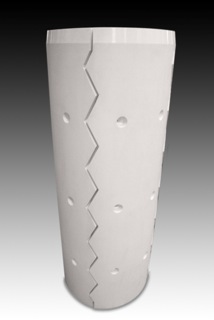
Kastalon brings 50 years experience in coil processing to the task of engineering a new offering of application-specific, proprietary formulated polyurethane mandrel sleeves, filler rings and filler plates. These products are designed to adapt the mandrel to handle coils with larger ID’s and addresses the problems of damage from creasing, scratching and marring at mills, service centers, toll processors and fabricators alike. Such damage is expensive for any coil handling operation, especially when the metal is prepainted or must maintain optimum cosmetic surface integrity. By the use of Kastalon mandrel sleeves, filler rings or filler plates on the uncoiler or recoiler, the inside wraps on coils are protected from metal to metal contact. More finished material is produced or usable, as a result.

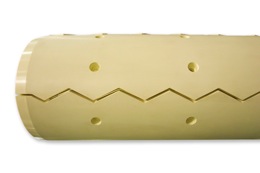
Mandrel sleeves are custom designed with engineered surface hardnesses and grooved or smooth finishes, depending on the particular application. Full sleeves are usually recommended for the recoilers, while filler rings and filler plates are more often utilized for uncoilers.


The design process begins at the company website, where a detailed needs-assessment questionnaire can be completed, followed by a discussion with Kastalon engineering to formulate the proper chemistry, surface and material hardness for the application.

In use, the proprietary chemistry of the Kastalon Polyurethane material withstands the stress caused by the weight of the coil, then reforms when the mandrel is collapsed back to the rest position, owing to the inherent memory of the Kastalon engineered material. With other materials now on the market, sleeves will often sag due to memory loss and the resulting gap can cause significant coil damage. Correspondingly, additional labor and line downtime result from this condition, as realignment of the coil, sleeve and mandrel is needed. Through the true and precise sizing of the mandrel sleeve, combined with the proper material hardness and surface texturing, a Kastalon sleeve can last up to 10 times longer than rubber, fiber or even other commodity type polyurethane products, according to company research, available on request.


Mandrel sleeves, filler rings and filler plates allow coil processing to be accomplished more efficiently, whether on uncoil or recoil reels, at mills, service centers, toll processors and fabricators.

Kastalon mandrel sleeves are non-marring, cut-resistant, abrasion-resistant and offered for friction fit, requiring a separate “keeper”, or bolt-on installation. Company engineers consult customers on the amount of lubricant, cleaning solution or other coating chemistries present in the process, as this will determine the particular formulation selected. Furthermore, Kastalon offers these mandrel sleeves in a wide variety of grooved or soft surface finishes to meet the specific tension and pressure requirements of a processor’s uncoil/recoil apparatus. Special dual-durometer sleeves are also available for mills and processors where “head-in” damage is often encountered.

For most uncoilers, Kastalon filler rings or filler plates can provide the optimum performance for the tension, pressure and metal contact requirements typically present.


Kastalon engineers match assorted textured surfaces and material hardnesses to the application.

The design process for Kastalon mandrel sleeves can begin with a visit to the company’s website, www.kastalon.com, for completion of a needs assessment questionnaire. Detailed information is gathered on this form, allowing the Kastalon engineers to calculate the best sleeve design and chemical composition to suit the job.

Polyurethane Is A Perfect Fit For Pipe And Bar Straighteners

Pipe and bar straighteners are a great market for polyurethane parts for noise suppression, product protection and conveying. Kastalon has supplied this market place with many parts on an MRO basis. We have developed a material that has the impact resistance, cushioning and enhanced wear resistance required to provide the optimum in life for a trough liner.

We would recommend using material thicker than 3/4″, generally 1-1/4″ to 2″ thicknesses is ideal. The liner will function properly until it is worn through. Some additional positions that could and should be polyurethane/plastic covered are:

  • Protective Pads: (shock absorption, noise suppression, cut, tear and abrasion resistance, product protection)
  • Kicker shoes (these are the arms that pick up and push or kick the tube/pipe/bar, down the ramps).
  • Transfer arm covers (similar or the same as kicker arms, they also may be a wheel moving the pipe from one conveyor to the other)
  • Any hard stop surfaces for the pipe
  • V Rollers for roller transport (better friction and drive than plastic)

Kastalon produces a highly engineered a polyurethane compound in 75 Shore D hardness that is extremely effective in protecting the pipe surface and has a very long life. We find these straighteners mostly in solid bar plants where shafting and forging stock have very critical surface finish requirements (to prevent stress points in the surface of the bar which lead to cracks)

Any where there is shock, polyurethane due to its elastomeric nature, including in plastic hardness, is more effective and long lived than plastic.

Rubber Forming Pad History: Comparisons of Materials and Introduction of Gümmilast Polyurethane for Forming Pads and Fluid Cells

Short run forming of complex sheet metal shapes using rubber dies and pads is quick and highly effective.  This technique was first accomplished using the Guerin Process.  After the Second World War, the Wheelon process was developed as an improvement over the Guerin Process.  A Wheelon press is capable of manufacturing large, complex, short run parts with economic tooling. This type of hydraulically actuated bladder forming is widely used in the aerospace industry today.

When the Wheelon process was first employed, the forming press fluid cells and forming pads were made of Neoprene rubber.  The Neoprene formulations of the day were developed by rubber molders’ chemists.  Their formulas were proprietary and highly secretive.

The high grade formulation of Neoprene used was an excellent material for the function of forming pads and fluid cells.  It was tough, had very high extensibility, good cut resistance, excellent oil resistance and produced good detail with moderate pressures.

This was the standard material for Wheelon forming pads and fluid cells for many years.  However, as the U.S. industrial rubber goods industry matured, its productive capacity diminished.  The industry lost the capacity and knowledge required to make Neoprene pads and cells.  There are presently no suppliers of rubber Wheelon or Guerin cells or pads in North America.

Product shown in use in the Wheelon process, one used extensively in the aerospace and other industries.

Fortunately, there was capacity to produce these parts from polyurethane.  Polyurethane is a synthetic elastomer that is far stronger than Neoprene.  Polyurethane has greater cut resistance, more abrasion resistance, greater tensile strength and has suitably high elongation for effective use in the Wheelon process.

Polyurethane is also a more environmentally stable material than the original Neoprene.  Most often, when installing forming pads and upon starting forming operations, the Neoprene would be “dried out”.  This would lead to shrinkage of the pad and increased stiffness.  In order to install the pad and/or start the operation, it would be necessary to heat the Neoprene to restore it to its original softness and resilience.  Polyurethane is far more consistent, retaining its size, shape and maintaining its softness and resilience.  This eliminates the need for heat “rejuvenation”.

However, in spite of the superiority of the physical properties of polyurethane over the previously used Neoprene, there is a drawback to polyurethane.  Due to its increased strength and toughness, far greater pressures must be employed to achieve acceptable part definition and this results in greater strain on the press, its components and some reduction in forming definition.

Some of the difficulties encountered with the use of commercial and even Kastalon KAS43210AE forming pads and cells are:

  • Increased wear and maintenance of the press due to the high degree of loading
  • Decreased press life
  • Reduction in size capacity
  • Reduced part definition requiring increased handwork
  • Increased set-up time, due to the need for more accurate filler/intensifier pad placement
  • The risk of damage to the forming pad if the press filler/intensifier pads are not properly used
  • Increased tendency for forming pad extrusion due to higher pressures
  • Increased risk of catastrophic failures
  • The inability to make field repairs

The challenge to industry has been to create a material that has polyurethane’s toughness and the extensibility of the lost Neoprene material.

Our initial discoveries led us to improve the traditional polyurethane formulations to increase extensibility, reduce working pressure and improve cut and tear strength in the “mid extension” ranges where these pads operate.  However, this was only a compromise and a temporary solution to producing a forming pad with superior performance.

After years of continuing research, a hybrid polyurethane compound, trademarked Gümmilast by Kastalon, has been developed.  The properties of Gümmilast are very similar to the original Neoprene in performance and exceed the toughness of traditional polyurethane.  A comparison of the original Neoprene, Gümmilast, Kastalon KAS43210AE and commercial polyurethane is presented in the following table.

Physical Properties: Traditional Neoprene vs. Polyurethane
Neoprene Gümmilast KAS021909A Kastalon KAS43210AE Commercial PUR
Hardness, Shore A Tensile, psi 55-602,002 psi 602850 704153 704660
Elongation 773 % 774 694 630
5% modulus 92 psi 133 201 221
50% 119 psi 184 260 282
100% 157 psi 229 340 360
200% 277 psi 262 434 475
300% 472 psi 337 522 670
400% 741 psi 471 738 985
Split tear 228 psi 191 181 185
Dynamic modulus 289 372 733 836

The similarity between Gümmilast and the original Neoprene is apparent.  In the operating range extension (250-400%), previously available polyurethanes create far higher internal stresses.  The rapid increase of these stresses in this operational strain range leads to need for higher pressure and less definition.  This makes tool design and the use of intensifier pads highly critical.

When using Gümmilast, the reduction in operating pressure will yield greater press life, while offering greater part definition.

Life testing of Gümmilast pads and cells is ongoing.  To date, Kastalon anticipates 3-6 times the life of Improved Kastalon Polyurethane and an even greater life over commercial polyurethane.

In conclusion, Kastalon Gümmilast will provide the Wheelon Process user with a material that offers similar process ease, forming definition and reparability as experienced with the original rubber and providing significantly improved life over commercial polyurethane.  Gümmilast is also available for hydroforming bladders, throw pads and Guerin Process pads.

Kastalon Gümmilast products are available from your press parts provider or from Kastalon, Inc.

Kastalon Awarded the Safety Award of Honor

Kastalon, Inc. has won a Safety Award of Honor in the FMA/CNA 2009 Safety Award Contest sponsored by the Fabricators & Manufacturers Association, Int’l, and CNA Insurance. FMA/CNA Safety Awards are based on your company’s 2012 safety results compared to the most recently published Bureau of Labor Statistics (BLS) incidence rate for your NAICS code. The Safety Award of Honor is awarded to companies having no record able injuries or illnesses. The award recognizes your company for its commitment to providing a safe work environment for its most valuable asset – the employees.

Congratulations to Kastalon and all their employees for a job well done.